
When it comes to transcription tools, accuracy is everything. Whether you’re recording meetings, interviews, or podcasts, even small errors can change meaning or cost you time during editing.
In this article, we’ll compare three major players—Otter.ai, Rev, and Descript—based on real-world accuracy, practical testing scenarios, and user experiences.
If you’re building your understanding of Otter AI, you should also check Otter AI Transcription Accuracy Test: How Reliable Is It in 2026?
For a full breakdown, don’t miss Review of Otter AI.
Table of Contents
Otter AI vs Rev vs Descript: How Do They Compare in Accuracy?
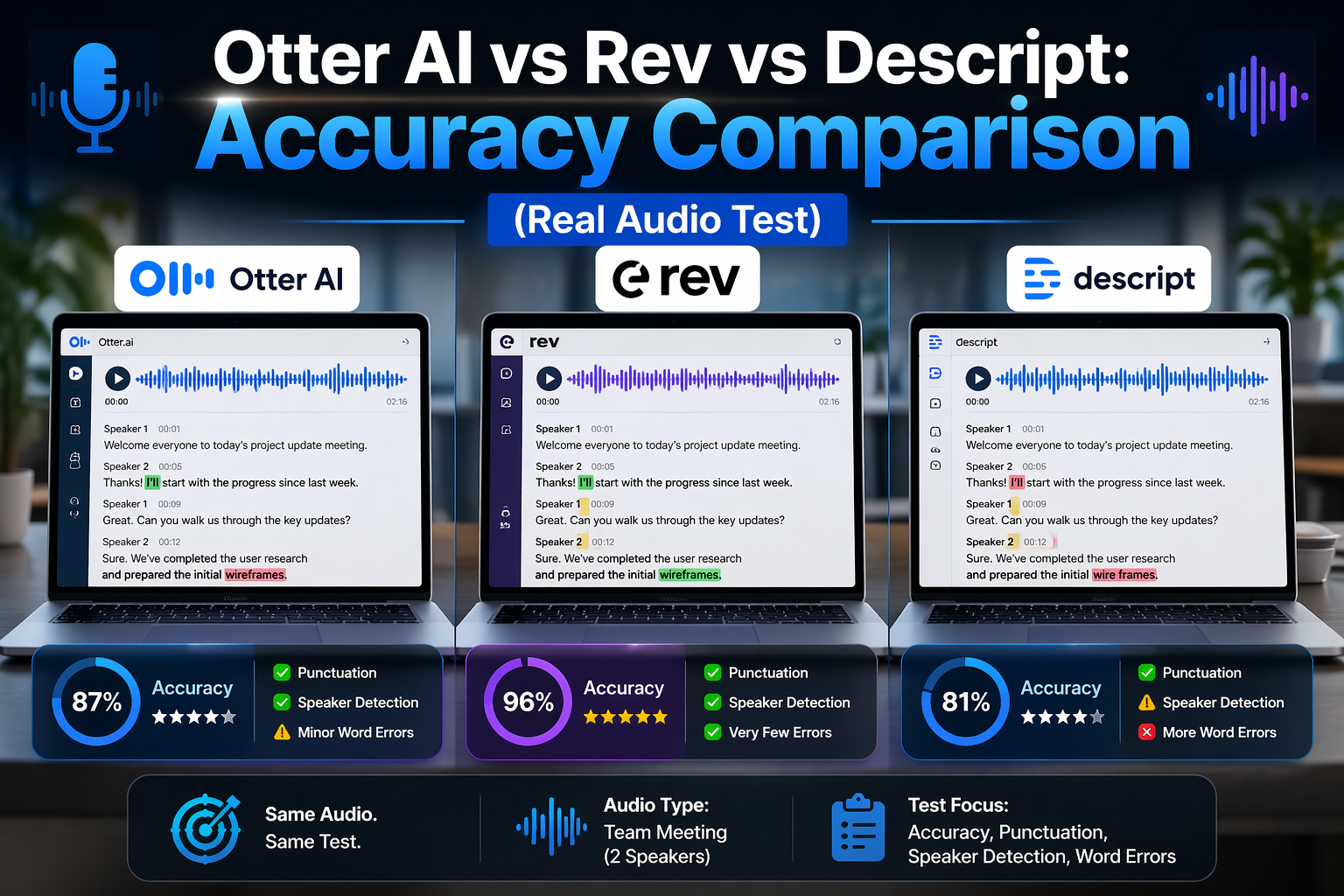
At a surface level, all three tools perform well, but there are clear differences when you look closely. Otter AI typically delivers around 85–90% accuracy in standard conditions, making it reliable for everyday use like meetings and note-taking. Descript performs in a similar range but often edges slightly ahead due to its audio enhancement features, which help clean recordings before transcription. Rev stands out because it offers both AI and human transcription, with its human service reaching up to 99% accuracy.
What this means in practical terms is that Otter AI is fast and convenient, Descript is slightly more refined for creators, and Rev is the most accurate overall—especially when precision matters.
Real Audio Test: Clean Audio (Single Speaker)
In a clean recording with a single speaker, the differences between these tools become much less noticeable. Otter AI performs very well in this scenario, often achieving near-perfect transcription with only minor punctuation or formatting errors. Descript matches this performance closely and sometimes produces slightly cleaner output due to its processing of audio clarity.
Rev’s AI transcription also performs strongly, but its human transcription service is where it truly shines. In clean audio conditions, human transcription is nearly flawless, capturing not just words but also tone and intent more accurately.
For most users, any of these tools will work well in this scenario, and the choice comes down more to workflow preference than accuracy.
Real Audio Test: Meetings with Multiple Speakers
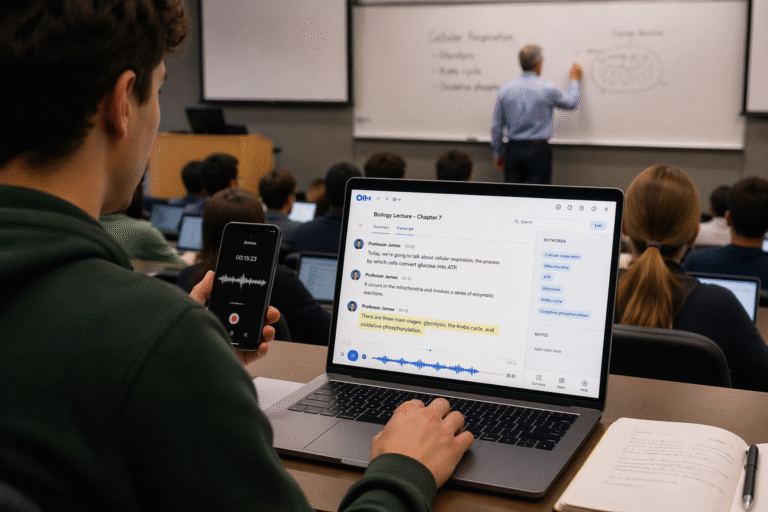
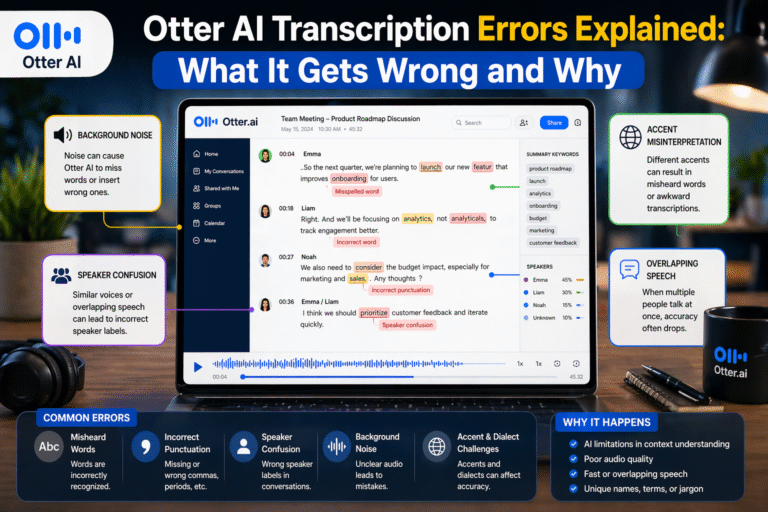
Meetings introduce complexity, and this is where differences in performance become more visible. Otter AI is designed for meetings and does a good job capturing conversations in real time, but it can struggle when speakers interrupt each other or talk simultaneously. This often leads to merged sentences or incorrect speaker labels.
Descript handles multi-speaker audio slightly better, especially when the audio quality is not perfect. Its processing tends to maintain clearer sentence structure, although it still faces challenges with overlapping speech.
Rev’s AI performs comparably to the others, but its human transcription service stands out significantly in this scenario. Human transcribers can distinguish speakers more accurately and maintain context throughout the conversation.
From experience, Otter AI is still one of the most convenient tools for meetings, but it’s not always the most precise when discussions become dynamic.
Real Audio Test: Accents and Non-Native Speech
Accents remain one of the toughest challenges for AI transcription tools. Otter AI handles mild to moderate accents reasonably well, but accuracy drops as speech patterns become more complex or unfamiliar. Descript performs slightly better in this area, partly because of its ability to enhance audio before transcription.
Rev again leads in this category, particularly with its human transcription service, which can interpret context, cultural expressions, and pronunciation differences more effectively than AI.
This aligns with what we explored in Does Otter AI Work for Accents? Accuracy Test with Real Examples, where AI tools were shown to struggle more with non-standard speech patterns. In real-world use, this means that if your recordings involve diverse accents, you should expect to spend more time editing AI-generated transcripts.
Real Audio Test: Noisy or Poor Audio Conditions
Noisy environments are where the gap between these tools becomes even clearer. Otter AI’s accuracy drops when background noise is present, as the system relies heavily on clean audio input to function effectively. Descript performs slightly better in this scenario due to features like “Studio Sound,” which improves audio clarity before transcription.
Rev’s AI transcription behaves similarly to Otter in noisy conditions, but its human transcription service remains highly accurate even when audio quality is poor. Human listeners can use context to fill in gaps that AI cannot.
In real-world situations, this means that if your recordings are not clean—such as outdoor interviews or busy office environments—AI tools will require more correction afterward.
Word Error Rate (WER): A Deeper Accuracy Comparison
To better understand accuracy, it’s useful to look at Word Error Rate (WER), which measures how many mistakes a transcription system makes. Lower WER means higher accuracy.
Independent evaluations have shown that Rev generally has lower error rates than Otter AI, especially in noisy or complex audio environments. Otter AI tends to have higher error rates when dealing with multiple speakers or challenging conditions, which reflects its reliance on clear input.
While these differences may seem small in percentage terms, they become significant in longer recordings where even a small error rate can result in dozens of mistakes.
Real User Experiences: What People Actually Say
Looking at user feedback, a clear pattern emerges across all three tools. Otter AI is widely praised for its speed and ease of use, especially in meetings and live transcription scenarios. However, users often mention the need for editing, particularly when dealing with accents or fast conversations.
Descript is popular among content creators because it combines transcription with powerful editing tools, making it easier to refine audio and text in one place. Users often find it slightly more accurate in challenging conditions.
Rev is consistently recognized for its accuracy, especially when using human transcription. Many users rely on it for professional or client-facing work where precision is critical.
From my own experience, Otter AI is excellent for capturing ideas quickly, but I wouldn’t rely on it alone for final output without reviewing the transcript.
Otter AI vs Rev vs Descript: Which One Should You Choose?
Choosing the right tool depends on your specific needs and workflow. If you need real-time transcription for meetings and quick note-taking, Otter AI is one of the best options available. It’s fast, convenient, and integrates well into everyday workflows.
If your priority is accuracy, especially for professional or sensitive content, Rev is the better choice. Its human transcription service provides a level of precision that AI tools cannot yet match.
If you’re a content creator working with podcasts, videos, or online content, Descript offers a strong balance between transcription accuracy and editing capabilities, making it a versatile all-in-one solution.
Final Thoughts: Which Tool Wins the Accuracy Battle?
There’s no single winner—it all depends on what you value most.
Otter AI stands out for speed and convenience, making it ideal for meetings and quick documentation. Descript offers a balanced approach, combining solid accuracy with powerful editing tools. Rev delivers the highest accuracy, especially with human transcription, making it the best choice for critical work.
The most effective approach for many users is to combine these tools—using AI for speed and then refining the output when accuracy matters.
FAQs: Otter AI vs Rev vs Descript
Which transcription tool is the most accurate?
Rev’s human transcription service is the most accurate, often reaching up to 99%, while AI tools like Otter AI and Descript typically range between 85% and 95%.
Is Descript more accurate than Otter AI?
In many scenarios, yes. Descript often performs slightly better, especially in noisy environments or with complex audio.
Is Otter AI good enough for professional use?
Otter AI is suitable for meetings and internal use, but for high-accuracy requirements, manual editing or human transcription is recommended.
Why is Rev more accurate than AI tools?
Rev combines AI with human transcription, allowing it to better understand context, accents, and complex speech patterns.
Can I rely on AI transcription alone?
AI transcription is great for drafts and quick notes, but for final or professional output, human review is still necessary.