
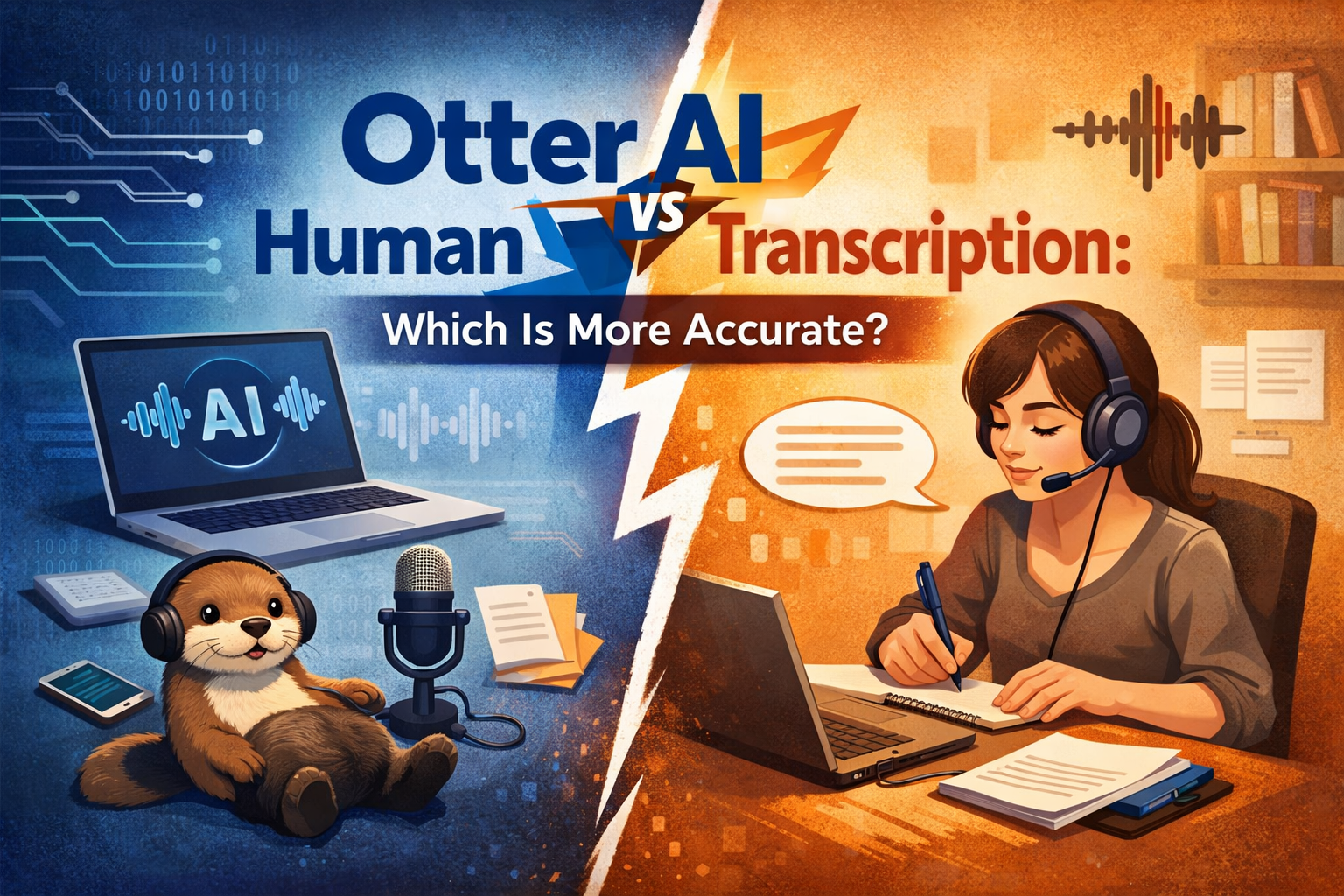
In a world where meetings, interviews, podcasts, and online lectures are happening every second, transcription has become a core part of digital productivity. Tools like Otter AI have made it possible to convert speech into text in seconds, but the real debate still stands: is AI transcription actually as accurate as human transcription?
From my experience working with AI tools and reviewing transcription systems, I’ve seen both sides closely. Otter AI is fast and impressive, but human transcription still holds a strong edge in accuracy, especially when things get complicated.
This article breaks down both sides in detail, using real-world experience, industry insights, and findings from reputable sources.
I’ll also naturally reference two related articles on this blog:
Understanding Otter AI Transcription Accuracy in 2026
Otter AI uses advanced speech recognition technology to convert spoken words into text in real time. In controlled environments—where audio is clear and speakers are consistent—it performs very well. In fact, studies and user benchmarks suggest it can reach up to 95%–99% accuracy in ideal conditions, but this drops significantly in real-world situations.
Independent evaluations show that in everyday meeting environments, Otter AI typically performs around 80%–90% accuracy, especially when there is background noise, overlapping speech, or strong accents. According to a breakdown by SummarizeMeeting, accuracy varies heavily depending on audio quality and speaker clarity.
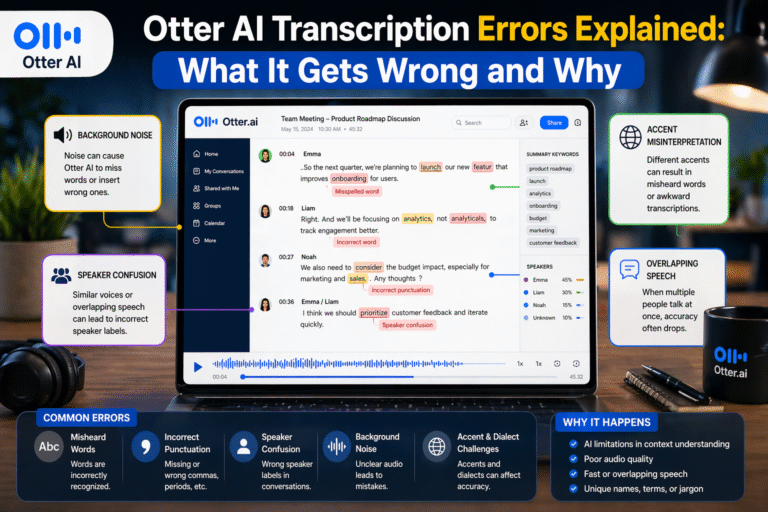
I explored this further in my article Otter AI Transcription Accuracy Test: How Reliable Is It in 2026?, where I tested it across meetings, lectures, and recordings. One thing became very clear—Otter AI is extremely efficient, but it is not flawless. It often struggles with names, technical terms, and fast conversations.
👉 You can read that full breakdown here: Otter AI Transcription Accuracy Test: How Reliable Is It in 2026?
How Human Transcription Works Compared to AI Tools
Human transcription is the traditional method where trained professionals listen to audio recordings and manually convert them into text. Unlike AI, humans understand context, emotion, tone, and even unclear speech patterns. This allows them to correct meaning rather than just transcribe words.
Industry comparisons consistently show that human transcription achieves 98%–99.5% accuracy, even in difficult audio conditions. A detailed analysis by NovaScribe highlights that human transcription remains the gold standard for accuracy, especially in professional and legal settings.
What makes human transcription powerful is contextual understanding. For example, when speakers use slang, switch accents, or speak over each other, human transcribers can interpret meaning correctly, while AI tools often produce errors or incomplete sentences.
Otter AI vs Human Transcription Accuracy: Real-World Comparison
When comparing both systems side by side, the differences become clearer depending on the environment.
In clear, quiet audio conditions, Otter AI performs surprisingly close to human transcription. It can reach near-human-level accuracy, and for many users, the difference is barely noticeable. However, once real-world complexity enters the picture—such as group discussions or noisy environments—human transcription becomes significantly more reliable.
AI transcription tools typically perform best at around 80%–90% accuracy in real meetings, while human transcription maintains consistency at around 95%–98% accuracy, even under challenging conditions. According to AI productivity research, transcription accuracy drops sharply when multiple speakers overlap or when audio quality is poor.
From my own experience, this difference is very obvious. I’ve used Otter AI in team discussions where it misheard names, merged sentences, and struggled to separate speakers. A human transcriber, on the other hand, usually gets these details right because they understand context, not just sound patterns.
Handling Accents, Jargon, and Complex Conversations
One of the biggest gaps between Otter AI and human transcription is how each handles language complexity. AI tools are improving, but they still struggle with strong accents, fast speech, and specialized vocabulary.
Otter AI often misinterprets technical terms or industry-specific jargon unless it has been trained in that domain. Human transcription handles this much better because humans can infer meaning from context and correct errors during the transcription process.
This difference becomes especially important in fields like healthcare, law, and engineering, where a small mistake can change the meaning of an entire statement.
Speed vs Accuracy: The Core Trade-Off
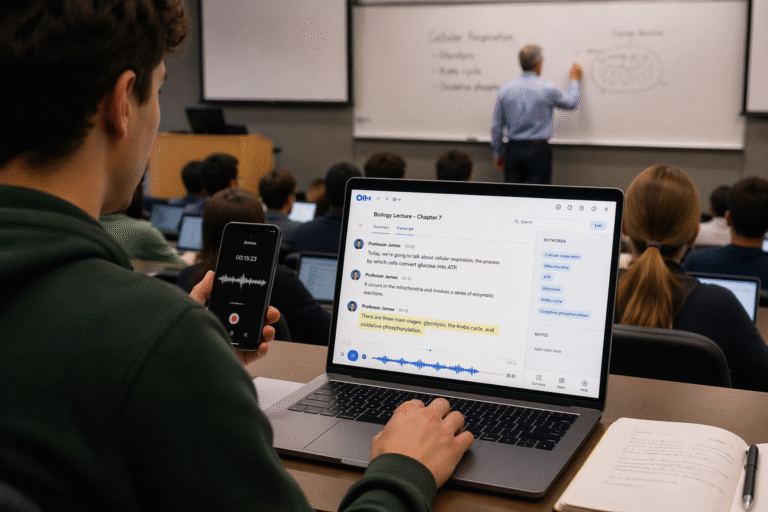
The biggest advantage of Otter AI is speed. It can generate transcripts in seconds or minutes, which makes it extremely useful for real-time note-taking, meetings, and content creation.
Human transcription, however, takes much longer. Depending on the length and complexity of the audio, it can take hours or even days to produce a final transcript. This is why AI tools are often preferred for quick turnaround needs.
But speed comes with a trade-off. While Otter AI delivers instant results, human transcription delivers refined accuracy. In many workflows today, people actually use both—AI for the first draft and humans for final editing.
What Experts and Research Say
Research consistently shows that AI transcription systems perform well but are not yet perfect replacements for humans. Across multiple studies, AI tools generally reach 90%–96% accuracy in good conditions, while human transcription remains above 98% accuracy in most professional contexts.
This gap is especially important in regulated environments. Educational institutions, government agencies, and NGOs that handle sensitive information often require human-reviewed transcripts to ensure accuracy and compliance. This aligns with broader accessibility and documentation standards used in formal reporting environments.
The conclusion across most industry research is simple: AI is excellent for speed and productivity, but humans are still required for precision and accountability.
Personal Experience: When Each One Wins
From my personal use of Otter AI and manual transcription workflows, I’ve noticed a clear pattern.
Otter AI works best when I need quick summaries, meeting notes, or rough drafts of content. It saves time and reduces manual effort significantly. However, when I need polished, publication-ready transcripts or work involving technical content, human transcription is far more reliable.
This is why I emphasized in my Otter AI Review that Otter AI should be seen as a productivity assistant rather than a full replacement for human transcription.
👉 Read more here: Otter AI Review
Final Thoughts
The comparison between Otter AI and human transcription is not about choosing a winner, but about understanding purpose.
Human transcription is still more accurate overall, especially in complex or professional settings. Otter AI, on the other hand, is incredibly fast, affordable, and efficient for everyday use.
The smartest approach today is not choosing one over the other, but combining both—using AI for speed and humans for accuracy when it truly matters.
As AI continues to improve, the gap will likely shrink, but for now, human transcription still leads in precision, while Otter AI dominates in convenience.
FAQ: Otter AI vs Human Transcription
1. Is Otter AI more accurate than human transcription?
No. Human transcription is generally more accurate, especially in complex or noisy environments.
2. How accurate is Otter AI in real use?
In real-world conditions, Otter AI averages about 80%–90% accuracy depending on audio quality and speaker clarity.
3. Why is human transcription more accurate?
Because humans understand context, accents, tone, and meaning—not just spoken words.
4. Can Otter AI replace human transcription?
Not fully. It is great for speed and convenience, but not reliable enough for legal or highly technical work.
5. What is the best use of Otter AI?
It is best for meetings, lectures, interviews, and generating quick draft transcripts.