
Imagine this for a moment. You’re writing an important email, polishing a blog post, or submitting a school assignment. You reread it once, twice, maybe three times—but you’re still not confident. Is the tone right? Did you miss a grammar mistake? Does it sound professional enough?
This is exactly where the Grammarly AI Writing Assistant steps in. It promises cleaner sentences, clearer ideas, better tone, and fewer mistakes—all in real time. But with so many AI writing tools available today, is Grammarly still worth using?
I spent time testing Grammarly across different types of writing, reviewed real user feedback, and compared it to other popular writing assistant software.
What follows is a complete, honest breakdown of what Grammarly does well, where it struggles, and whether it deserves a place in your writing workflow.
Just in case, if you’re looking for a fast, all-in-one AI writing tool that goes beyond editing to full content creation, Writesonic is worth trying.
What Is Grammarly AI Writing Assistant?
At its foundation, Grammarly is a grammar checker. But over the years, it has evolved into a full AI-powered writing assistant designed to improve how people communicate—not just fix errors.
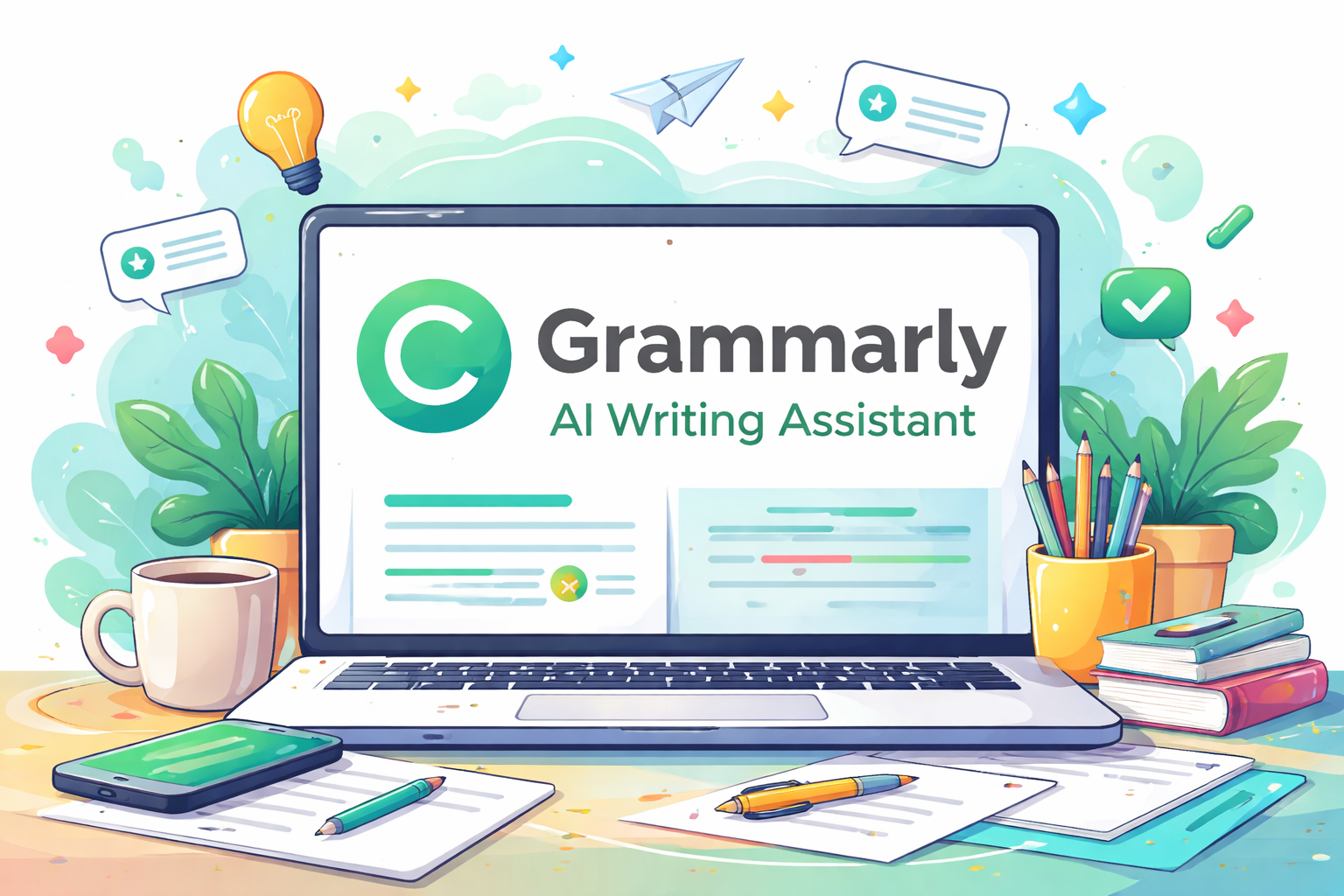
The Grammarly AI Writing Assistant reviews your text as you write and offers suggestions related to grammar, spelling, punctuation, clarity, tone, and style. More recently, it has expanded into AI-driven rewriting, sentence restructuring, and content enhancement features.
What sets Grammarly apart from many other AI writing tools is how seamlessly it integrates into daily workflows. It works inside browsers, Google Docs, Microsoft Word, email clients, desktop apps, and mobile keyboards. This makes it feel less like a separate tool and more like a constant writing companion.
Rather than simply pointing out what’s wrong, Grammarly tries to explain why something could be improved. Over time, this turns it from a correction tool into something closer to a writing coach.
Try Grammarly AI Assistant Now.
How Grammarly Improves Grammar and Writing Quality
The most widely used feature of the Grammarly AI Writing Assistant is its grammar, spelling, and punctuation correction. For many users, this alone is reason enough to install it.
Grammarly catches common issues like misspelled words, incorrect verb tenses, missing articles, and punctuation errors that are easy to overlook when you’re focused on ideas rather than mechanics. Even experienced writers find that it picks up small mistakes they would otherwise miss.
Beyond surface-level grammar, Grammarly also looks at sentence structure. It flags awkward phrasing, excessive passive voice, and unclear constructions, offering alternatives that are smoother and easier to read. This is especially helpful for non-native English speakers or anyone writing under time pressure.
The free version handles basic grammar checks surprisingly well, while the premium version expands into deeper stylistic and structural suggestions.
Tone Detection and Style Suggestions Explained
One of Grammarly’s most powerful features is tone detection. This is where the Grammarly AI Writing Assistant goes beyond traditional grammar checkers.
When you write, Grammarly analyzes whether your message sounds confident, polite, formal, friendly, or neutral. If your tone doesn’t match your intended audience, it alerts you. This can be incredibly useful in professional settings where tone misunderstandings can cause friction.
You can also set writing goals, such as audience type, formality level, and intent. Once these are set, Grammarly tailors its suggestions to fit those goals. For example, an academic paper will receive very different feedback than a casual blog post or a business email.
This level of customization makes Grammarly especially valuable for professionals who switch between different types of writing throughout the day.
Clarity, Conciseness, and Readability Improvements
Clear writing isn’t just about correct grammar—it’s about making ideas easy to understand. Grammarly excels in this area by focusing heavily on clarity and conciseness.
The Grammarly AI Writing Assistant highlights long or complex sentences and suggests simpler alternatives. It also points out redundancies, filler phrases, and vague wording that weaken your message. These suggestions don’t just clean up writing; they actively improve readability.
For bloggers, marketers, and students, this can make a noticeable difference. Content becomes more engaging, easier to skim, and more accessible to a wider audience.
While not every suggestion needs to be accepted, Grammarly’s clarity feedback often leads to stronger, more direct communication.
Grammarly’s Plagiarism Checker: How Reliable Is It?
Grammarly includes a plagiarism checker as part of its premium offering, making it particularly appealing to students and content creators.
The plagiarism tool compares your text against a large database of web pages and academic sources. It flags sentences that closely resemble existing content and provides links to the original sources. This helps users identify unintentional similarities before submitting work.
While it’s a helpful safeguard, it’s not perfect. It may miss obscure sources or content behind paywalls, and it can occasionally flag common phrases that aren’t actually problematic. For this reason, it should be viewed as a support tool rather than a final authority.
Still, as part of a broader writing assistant package, Grammarly’s plagiarism checker adds meaningful value.
AI Rewriting and Generative Features
The newer AI-powered features are where Grammarly starts to resemble modern generative writing tools. The Grammarly AI Writing Assistant can now suggest rewrites, alternative phrasings, and even help draft short sections of text.
These features are particularly useful when you’re stuck, unsure how to phrase something professionally, or trying to soften or strengthen your tone. For example, Grammarly can quickly rewrite a blunt email into something more polite and collaborative.
However, Grammarly’s AI writing capabilities are intentionally conservative. Unlike some AI tools that generate long passages of content, Grammarly focuses on refinement rather than creation. This keeps suggestions safer and more accurate but also means it’s not ideal for generating full articles from scratch.
User Experience and Cross-Platform Integration
One of Grammarly’s biggest strengths is how easy it is to use. The interface is clean, intuitive, and non-intrusive. Suggestions appear inline, allowing you to accept or ignore them instantly.
Because the Grammarly AI Writing Assistant works across browsers, email platforms, document editors, and mobile devices, it offers a consistent experience no matter where you’re writing. This continuity is something many competing tools struggle to match.
For users who write frequently throughout the day, this seamless integration significantly reduces friction and saves time.
Where Grammarly Falls Short
Despite its strengths, Grammarly is not without limitations.
One common criticism is the cost of the premium subscription. While the free version is useful, many of the most valuable features—tone detection, advanced style suggestions, plagiarism checking, and AI rewriting—are locked behind a paywall. For users on a tight budget, this can be a barrier.
Another issue is the potential loss of voice. Grammarly tends to favor clarity and neutrality, which can sometimes flatten creative or expressive writing. Writers who rely heavily on rhythm, unconventional phrasing, or stylistic flair may find some suggestions too restrictive.
Grammarly can also struggle with highly technical or specialized writing. In academic, legal, or scientific contexts, some suggestions may oversimplify language or misinterpret conventions. This makes manual review essential.
Finally, privacy concerns remain a consideration. Since Grammarly processes text in the cloud, users working with sensitive or confidential information may hesitate to rely on it fully.
Pros and Cons of Grammarly AI Writing Assistant
📊 Pros and Cons Table
| Pros | Cons |
|---|---|
| Improves grammar, spelling, and punctuation in real time | Premium features require a paid subscription |
| Excellent tone detection for professional and business writing | Can overcorrect and reduce creative writing voice |
| Strong clarity and conciseness suggestions | Less effective for highly technical or scientific content |
| Seamless integration with browsers, Google Docs, and email | AI rewriting suggestions can sound generic |
| Helpful plagiarism checker for students and content creators | Cloud-based processing raises privacy concerns |
| User-friendly interface with minimal learning curve | Free version is limited compared to premium |
Real-World Experience Using Grammarly AI Writing Assistant
In practical use, Grammarly shines most in professional and informational writing. Emails become clearer, reports sound more polished, and small mistakes are eliminated before they become embarrassing.
Where Grammarly struggles is in creative or highly technical writing. In these cases, suggestions must be reviewed carefully to ensure meaning and voice are preserved.
Overall, the Grammarly AI Writing Assistant works best when treated as a collaborative tool rather than an authority. The writer remains in control, using Grammarly as guidance rather than gospel.
Who Should Use Grammarly (and Who Might Not)
Grammarly is an excellent choice for professionals, students, bloggers, marketers, and non-native English speakers who want cleaner, more confident writing. It’s especially helpful for anyone who writes frequently and values efficiency.
However, it may be less suitable for writers who prioritize creative expression above clarity, those working exclusively in technical domains, or users who prefer offline or privacy-first tools.
Pricing and Value Considerations
Grammarly operates on a subscription model with a free tier and paid plans. The free version covers basic grammar and spelling, while premium plans unlock advanced writing insights.
For users who write daily or rely on written communication professionally, the cost can be justified. For occasional writers, the free version or alternative tools may be sufficient.
Final Verdict: Is Grammarly AI Writing Assistant Worth It?
The Grammarly AI Writing Assistant remains one of the most polished and reliable writing tools available today. It excels at improving clarity, reducing errors, and helping writers communicate more effectively.
It’s not perfect, and it won’t replace human judgment—but when used thoughtfully, it can significantly improve writing quality and confidence.
If writing is a regular part of your life, Grammarly is a strong investment. Just remember to treat it as a partner, not a replacement for your own voice.
FAQs
Is Grammarly AI Writing Assistant free?
Yes, Grammarly offers a free version with basic grammar and spelling checks. Advanced features require a paid subscription.
Is Grammarly safe for students?
Grammarly is widely used by students, but plagiarism results should always be reviewed carefully before submission.
Can Grammarly replace a human editor?
No. Grammarly is best used as a support tool, not a substitute for careful editing and proofreading.
Does Grammarly work with Google Docs and email?
Yes, Grammarly integrates smoothly with Google Docs, Gmail, and most major writing platforms.
Is Grammarly better than other AI writing tools?
For grammar, tone, and clarity, Grammarly is among the best. For long-form content generation, other AI tools may be more suitable.